Architectural Styles That Define Brentwood Homes
May 21, 2026
May 21, 2026
Ever notice how Brentwood homes can feel completely different from one street to the next, yet still seem unmistakably tied to the same neighborhood? That is part of Brentwood’s appeal. If you are buying, selling, or simply trying to understand what gives this Westside community its character, it helps to know that Brentwood’s architecture is shaped as much by terrain and lot layout as by style names. Let’s take a closer look at the architectural styles that define Brentwood homes and what makes them so enduring.
Brentwood is not a one-style neighborhood. Its residential character is layered, with older period-revival homes, classic ranch houses, mid-century modern enclaves, and newer contemporary builds all existing side by side.
That variety is closely tied to how the neighborhood developed. Planning materials describe flatter grid-patterned areas, gently curving streets with generous lots, and canyon-edge settings that rise into Mandeville and Kenter canyons. In practical terms, that means the home, the lot, and the landscape often work together as one design story.
In areas like Brentwood Park, this relationship is especially clear. One of the earliest subdivisions dates to 1906 and was laid out along the former Westgate streetcar line, creating a large-lot neighborhood with curving streets, traffic circles, and mature trees.
Before looking at specific styles, it helps to understand one of Brentwood’s defining features: how homes sit on the land. In many parts of the neighborhood, architecture is not just about the front facade. It is also about privacy, rear-yard orientation, terraces, courtyards, and views.
Survey materials note that Brentwood homes often feel more private, more landscape-dependent, and more oriented to the rear yard or view side than a typical urban house. That is one reason two homes with different design styles can still feel equally “Brentwood.” They often share the same focus on space, siting, and outdoor living.
Among Brentwood’s older homes, period-revival architecture remains an important part of the neighborhood’s identity. Survey materials identify examples from the 1920s through the 1950s, including American Colonial, Spanish Colonial, and Tudor homes, especially in early subdivision areas.
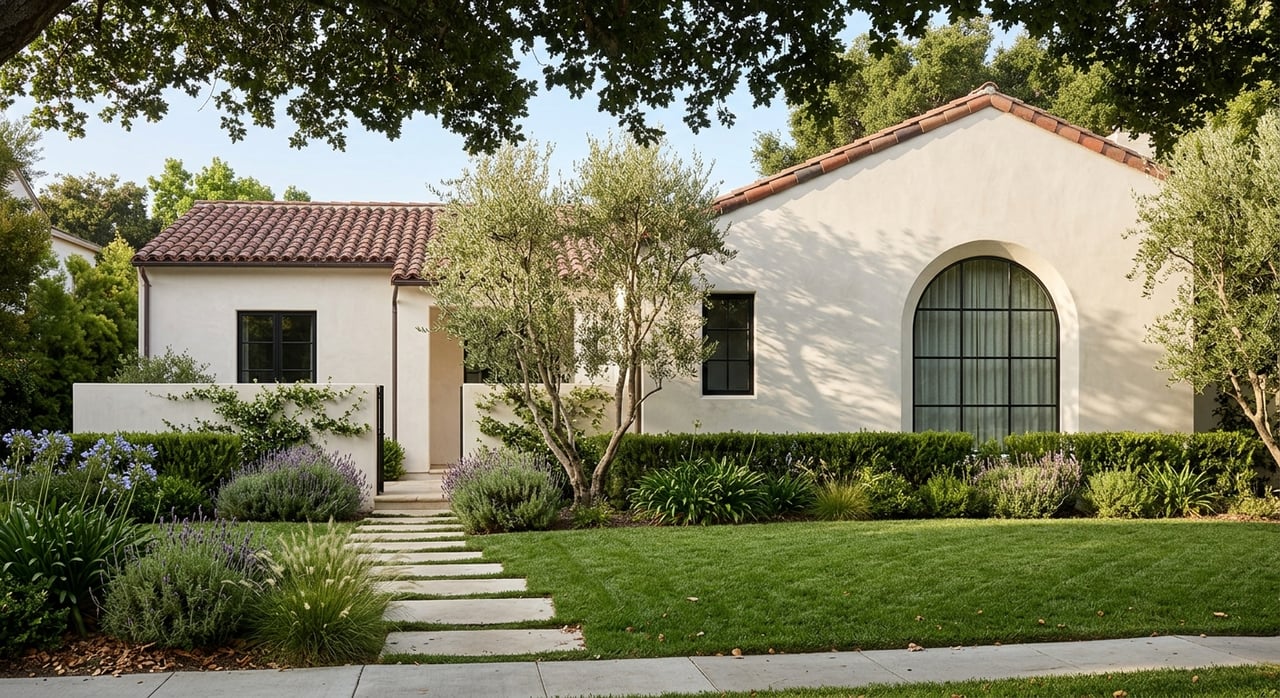
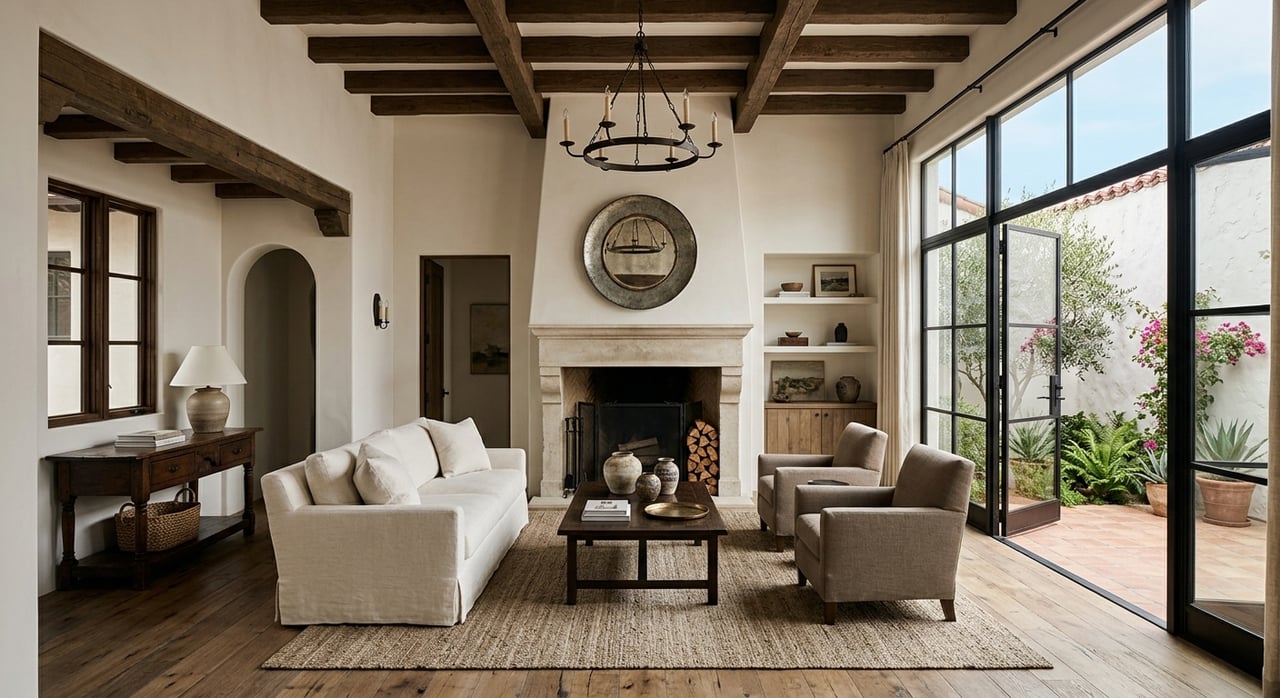
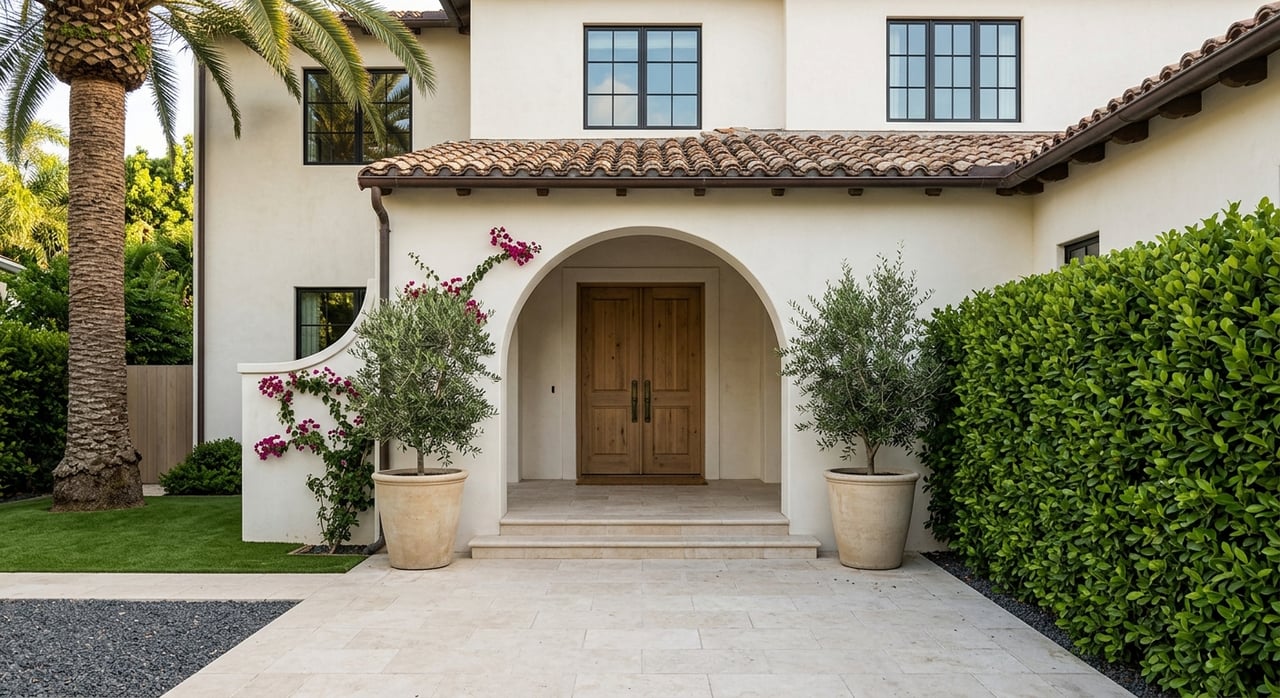
For many buyers, Spanish Colonial Revival is one of the easiest styles to recognize. These homes typically feature stucco walls, clay tile roofs, arched openings, balconies, courtyards or front courtyards, and wrought-iron or tile accents.
In Brentwood, this style often creates a different relationship to the street. From the front, the house may feel more enclosed and composed. Once you move deeper onto the lot, the layout often opens into a more sheltered, outdoor-oriented living experience.
Look for visual cues such as:
For sellers, these homes often stand out because of their strong curb presence and timeless details. For buyers, the appeal is often in the sense of warmth, privacy, and connection between indoor rooms and outdoor spaces.
Ranch homes are another key part of Brentwood’s architectural story. Local survey materials identify ranch houses in the neighborhood, including Cliff May work associated with the Mandeville Canyon and Old Orchard Road area.
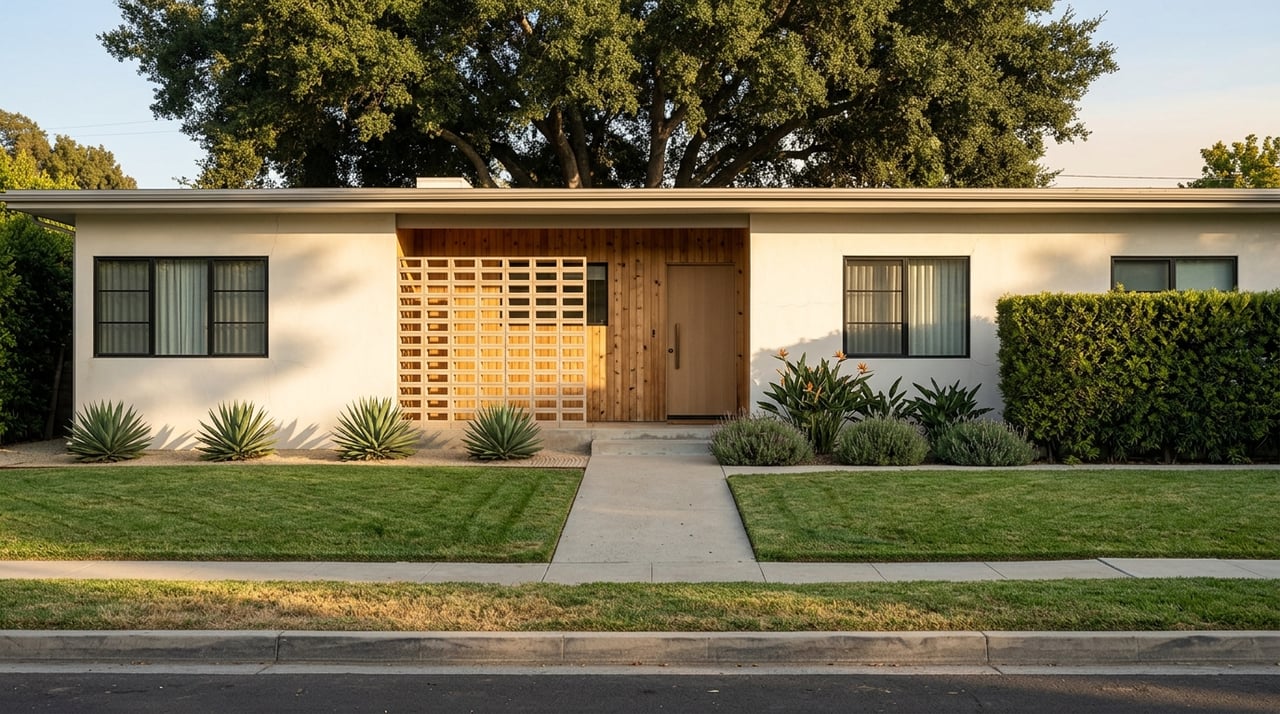
The California Ranch tradition is usually one-story, horizontal, and informal. Typical features include low-pitched roofs, wide eaves, picture windows, Dutch or French doors, attached garages, and broad, rambling floor plans.
In Brentwood, ranch architecture often makes excellent use of larger lots. These homes tend to create an easy transition between the house, patio, and yard, which gives them a relaxed, livable feel that still resonates with today’s buyers.
Ranch homes continue to appeal because they combine simplicity with flexibility. Their horizontal layout can feel approachable and comfortable, while the lot placement often supports strong indoor-outdoor flow.
They also fit naturally into Brentwood’s lower-density setting. On a generous parcel, a ranch house can feel calm, open, and highly usable without needing dramatic height or form.
If Brentwood has one especially strong modernist identity, it is in the hillside neighborhoods, particularly Crestwood Hills. SurveyLA describes these homes as primarily single-family residences that often take advantage of canyon and city views.
The planning logic in Crestwood Hills emphasized limited grading, open plans, large expanses of glass, and privacy-oriented siting. Homes were often placed at 45-degree angles to the street, and original guidelines kept houses to one story from street level.
The result is a version of mid-century modern design that feels distinctly Brentwood. These homes are often low-slung, view-conscious, and deeply connected to the surrounding landscape.
Common features include:
For a design-conscious buyer, this can be one of the neighborhood’s most compelling housing types. The architecture often feels understated from the street while opening dramatically to light, landscape, and outlook.
Newer contemporary homes are also part of Brentwood’s current architectural mix. In this neighborhood, the contemporary look often appears in newer hillside construction or major remodels rather than as a historic tract style.
Recent Brentwood examples highlighted in architectural coverage emphasize open circulation, glass walls, layered outdoor spaces, terraces, and strong indoor-outdoor connections. One modern home sits on a 26,000-square-foot lot with French doors and open flow, while another residence was designed across three tiers to maximize views and give nearly every room direct access to a terrace or deck.
These homes tend to interpret Brentwood through a more current lens. Instead of relying on traditional ornament, they often use volume, light, and seamless access to outdoor areas to create impact.
You will often notice:
In Brentwood, contemporary architecture usually works best when it responds thoughtfully to the lot. That connection between design and site is what keeps even newer homes aligned with the neighborhood’s broader character.
One of the most helpful ways to understand Brentwood architecture is to look beyond labels. A Spanish-inspired house, a ranch home, and a mid-century modern home may look very different, but each can reflect the same local priorities.
Those priorities include privacy, relationship to the land, and outdoor-oriented living. Whether the setting is a flatter street, a curving large-lot pocket, or a canyon-edge hillside, homes in Brentwood often feel designed around how you move from inside to outside.
That is why visual cues matter, but so does the bigger picture. Roofline, window pattern, cladding, and footprint are useful clues, yet the real defining feature is often how the home uses its lot.
If you are touring homes in Brentwood, it helps to look past staging and focus on the features that shape long-term livability and value. Architectural style matters, but so do siting and proportion.
As you compare homes, pay attention to:
If you are considering an older home, it is also worth noticing whether later additions changed the original massing, outdoor connections, or street-facing profile. City planning language frames neighborhood character around scale, height, bulk, setbacks, and appearance, so those details matter.
For sellers, architecture can be a major part of positioning a home well. In Brentwood, that does not just mean naming a style. It means showing how the design, lot, and lifestyle work together.
A Spanish Colonial home may offer courtyard privacy and classic detailing. A ranch home may appeal because of its ease of living and broad connection to the yard. A mid-century modern home may draw attention for its glass, siting, and view orientation. A contemporary home may stand out through terraces, circulation, and layered outdoor spaces.
The strongest presentation usually comes from understanding which features are truly defining. In a neighborhood like Brentwood, thoughtful guidance around architecture and design can help buyers see not only what a home is, but why it fits the setting so well.
What defines Brentwood is not a single architectural style. It is the way architecture, terrain, and outdoor living are designed together.
That is what gives the neighborhood its lasting appeal. From early period-revival homes to ranch houses, hillside mid-century modern residences, and newer contemporary builds, Brentwood offers a residential landscape with real depth and variety.
If you are thinking about buying or selling in Brentwood and want a thoughtful perspective on architecture, layout, and positioning, Shannon Minor offers discreet, highly personalized guidance grounded in local insight.
Stay up to date on the latest real estate trends.
Experience a level of service grounded in discretion, attentiveness, and lasting relationships.