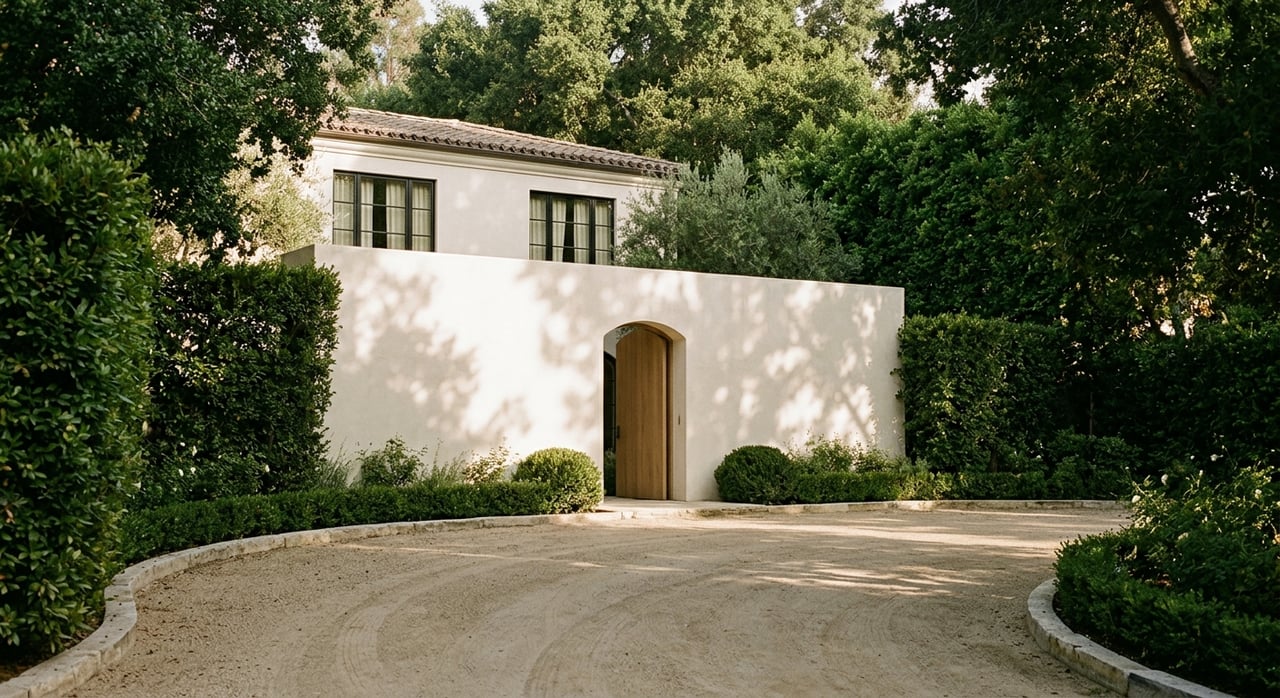
Bel Air vs Beverly Hills For Privacy-Focused Buyers
July 16, 2026
July 16, 2026
If privacy is at the top of your wish list, Bel Air and Beverly Hills can both look appealing at first glance. But once you get beyond the name recognition, the real question becomes how each area actually lives day to day. If you are trying to choose between a true retreat and a more connected luxury setting, this comparison will help you focus on what matters most. Let’s dive in.
For many buyers, Bel Air is the clearest match for a secluded, estate-style feel. The Bel Air-Beverly Crest Community Plan emphasizes preserving low-density, single-family residential character and open land, which helps explain why the area feels more protected and less urban.
That setting is not accidental. SurveyLA describes Bel Air’s original development as an estate subdivision with 128 lots across 1,700 acres of undeveloped hillsides, shaped by winding streets, underground utilities, bridle paths, and gates. Even today, many of the area’s privacy features come from that early layout.
Beverly Hills can also offer strong privacy, but it is less uniform from one pocket to the next. Because Beverly Hills is its own city with distinct single-family areas, the privacy experience can change significantly depending on whether you are looking in the Central Area, the Hillside Area, or Trousdale Estates.
That distinction matters. North of Sunset, the Hillside Area can feel very private, with larger lots, hillside streets, and homes often screened by gates or landscaping. In the Central Area, homes tend to sit on about 13,000-square-foot lots with sidewalks and a more pedestrian-friendly street pattern, which usually creates a more connected feeling.
Bel Air is known for non-gridded streets, large setbacks, privacy walls, and homes that often face views instead of the street. SurveyLA also notes the presence of private streets or gated communities in parts of the area. Together, those features can reduce visibility and create a quieter sense of arrival.
For a buyer, this often means the approach to the home feels more layered and less exposed. Curving roads, hillside placement, and orientation away from the street can make a property feel tucked away even before you factor in gates or landscaping.
Beverly Hills offers more variety. In the Hillside Area, the city describes large estates on roughly one-acre lots, streets that conform to the hills, and many roads without sidewalks. That can support a higher-privacy experience, especially when homes are set back and screened.
In the Central Area, the layout is more traditional and more walkable. Sidewalks and a more regular street pattern can be a plus if you want easier day-to-day access, but they usually create a different privacy profile than a winding hillside street in Bel Air.
If you want a home that feels like a retreat, Bel Air often has the edge. Its estate-oriented origins, larger setbacks, and view-driven siting often create more separation between home life and the street.
Beverly Hills can absolutely deliver privacy too, but you need to be more exact about the location. A hillside property north of Sunset may offer a very different experience from a home in the flats, even when both carry the Beverly Hills address.
Bel Air-Beverly Crest is overwhelmingly single-family and includes a wide range of architectural styles. SurveyLA records Craftsman, Spanish Colonial Revival, Mediterranean Revival, American Colonial Revival, Tudor Revival, French Revival or Norman, Mid-Century Modern, and Ranch homes, often by prominent architects.
In practical terms, Bel Air often feels more custom and shaped by the land itself. Homes may be oriented toward canyon or city views, and that design approach can support a stronger sense of visual separation from neighbors or passersby.
Beverly Hills is especially tied to period-revival architecture because much of its major growth took place in the 1920s and 1930s. The city’s style guidance identifies residential categories such as American Colonial, Rural European Revival, Spanish Colonial, Contemporary, and Period Revival.
This often gives Beverly Hills a more curated and composed visual identity, especially in the flats and in select hillside pockets. For buyers who care about architecture as much as privacy, that can be a major draw.
Bel Air remains mostly residential, with limited neighborhood commercial areas identified on upper Roscomare Road, Beverly Glen Circle, and near Sepulveda Boulevard and Moraga Drive, along with a few mixed office and retail locations. That limited internal commerce is part of what makes the area feel removed from daily street activity.
If you value strong separation between home life and errands, this can be a real advantage. Your surroundings may feel calmer and more insulated, which is often exactly what privacy-focused buyers want.
Beverly Hills has a denser commercial framework. The city places commercial zoning along major boulevards, and its Mixed Use Overlay Zone applies to selected corridors including Wilshire, Santa Monica, La Cienega, Robertson, Olympic, South Doheny, and South Beverly.
That does not mean every residential pocket feels busy. It does mean Beverly Hills usually offers easier access to daily conveniences, especially compared with Bel Air’s more residential character.
The right answer depends on what privacy means to you. If you picture a home that feels tucked away, with winding streets, larger setbacks, and a stronger retreat atmosphere, Bel Air is often the better fit.
If you want privacy but still value easier errands, a more connected city setting, or a broader range of neighborhood experiences, Beverly Hills may make more sense. In that case, the key is choosing the right pocket rather than relying on the city name alone.
The most useful comparison is rarely Bel Air versus Beverly Hills in the abstract. In both areas, privacy often comes down to the exact street segment, lot depth, sightlines, setbacks, landscaping, topography, and whether the house faces the street or the view.
That is why two homes in the same neighborhood can feel completely different. A well-positioned property with thoughtful orientation, mature screening, and strong setbacks may offer more privacy than a more expensive home on a more visible street.
When you tour homes, pay close attention to these details:
If your top priority is a retreat-like estate setting, start your search in Bel Air. If your goal is privacy with stronger day-to-day convenience, focus on Beverly Hills and pay special attention to hillside locations north of Sunset and other low-visibility pockets.
For many buyers, the smartest move is to compare homes not just by neighborhood name, but by how the property actually sits on the land. That is often where the real privacy value is found.
If you want a thoughtful, discreet perspective on Bel Air, Beverly Hills, and the Westside luxury market, Shannon Minor offers calm, highly personal guidance tailored to the way you want to live.
Stay up to date on the latest real estate trends.
Experience a level of service grounded in discretion, attentiveness, and lasting relationships.