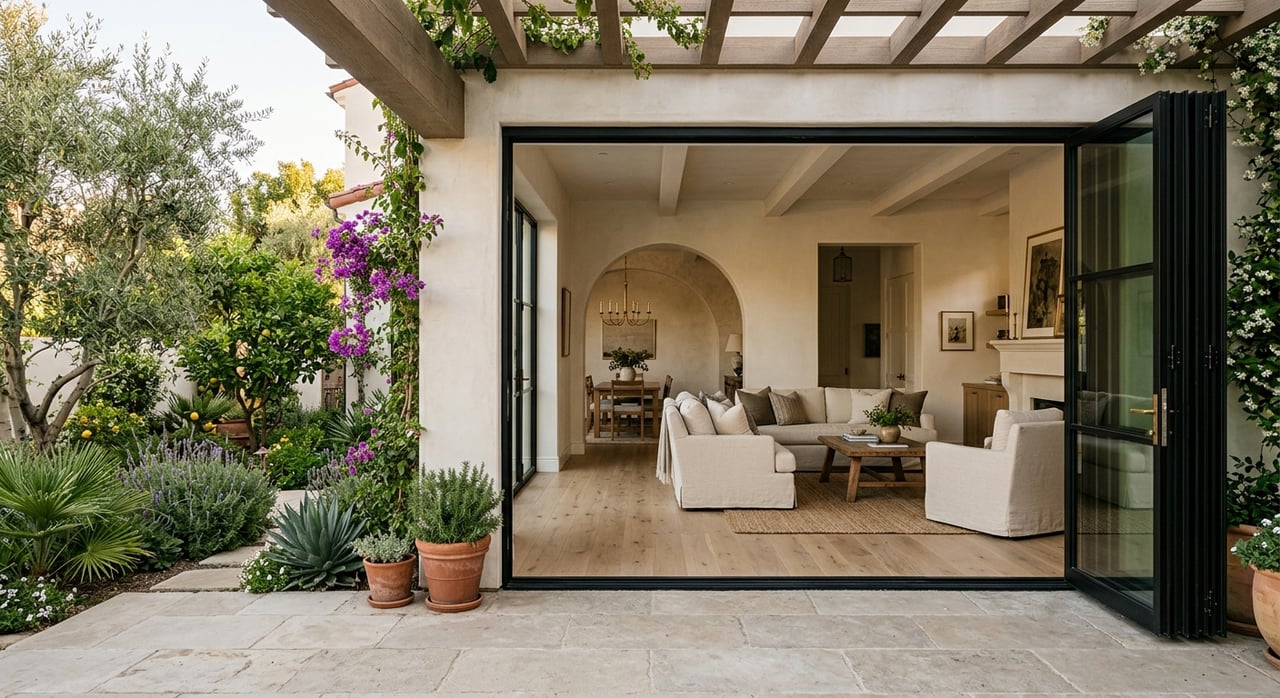
What It’s Really Like To Live In Santa Monica
June 4, 2026
June 4, 2026
If you picture Santa Monica as a sleepy beach town, the reality may surprise you. Living here often feels less like a getaway and more like life in a compact coastal city with a full daily rhythm. If you are considering a move, it helps to understand both the beauty and the tradeoffs so you can decide whether the lifestyle truly fits. Let’s dive in.
Santa Monica covers just 8.41 square miles, with an estimated 90,082 residents in 2025. That works out to about 11,067 residents per square mile, which helps explain why the city can feel active even on an ordinary weekday.
The pace picks up even more during the day. According to the City of Santa Monica, the daytime population rises to roughly 250,000, and the city draws more than 8 million visitors each year. For you, that can mean easy access to restaurants, shopping, and cultural activity, but also more foot traffic and a livelier atmosphere than the size of the city might suggest.
One of the most useful ways to think about Santa Monica is as a full-service city by the ocean. The city operates transit, parking, libraries, recreation, rent control, and cultural programming, so the experience of living here is shaped by far more than the beach.
That is a big reason Santa Monica feels unusually complete. Instead of functioning only as a scenic destination, it supports day-to-day routines with practical infrastructure, community spaces, and civic services that many beach communities do not offer at the same level.
Santa Monica is relatively affluent and highly educated, with a median household income of $114,885 and 70.7% of adults age 25 and older holding a bachelor’s degree or higher. At the same time, the housing profile is notably renter-heavy, with an owner-occupied housing rate of 27.9%.
Costs are part of the picture too. Median gross rent is $2,402, which reflects the premium many people pay for the location, amenities, and coastal access. If you are weighing a move here, it is important to plan for a market where convenience and lifestyle often come at a higher price point.
In Santa Monica, your day-to-day experience can change a lot depending on where you live. The city is small, but the feel from one area to another is distinct enough that choosing the right neighborhood matters.
Downtown and the Third Street Promenade are the most visitor-heavy parts of Santa Monica. This area has the highest concentration of shops, restaurants, and hotels, along with street performers and a twice-weekly farmers market.
If you like being in the middle of the action, this part of town can feel convenient and energetic. If you prefer a quieter environment, the steady foot traffic and weekend crowds may feel like too much.
Main Street offers a more laid-back atmosphere with galleries, boutique retail, coffee shops, and a Sunday farmers market. It still feels active, but the rhythm is generally more local and less tourist-driven than Downtown.
For many buyers and renters, this area appeals because it balances walkability with a more neighborhood-oriented feel. It is a good example of how Santa Monica can feel both lively and lived-in.
Mid-City is known as an arts and entertainment hub, anchored by Bergamot Station and other creative uses. It offers a different version of Santa Monica living, one that is less centered on the shoreline and more connected to arts spaces and inland convenience.
If beach proximity is not your only priority, Mid-City may feel practical and interesting. It shows that Santa Monica living is not limited to ocean views and tourist landmarks.
Montana Avenue is more tree-lined and residential in feel, with over 150 boutique shops and restaurants across about 10 blocks. Ocean Park is known for its independent coffee shops, boutique stores, and galleries, while Pico Boulevard feels more local and connected to Santa Monica College, neighborhood shops, and its own farmers market.
These areas help explain why Santa Monica appeals to people who want a coastal setting without feeling like they live in a resort district. Even within a small footprint, there is a meaningful range of day-to-day experiences.
Santa Monica’s rental market is unusually regulated for a Westside beach city. The city states that rent control has been in place since April 1979, and current rent-control information says rent increases during a tenancy are limited by law while tenants also have just-cause eviction protections.
That structure can shape how renters evaluate stability and long-term housing costs. The city’s Housing Office also says it creates housing opportunities and administers rental assistance for about 1,400 very low- and low-income households, which adds another layer to the local housing landscape.
In Santa Monica, the outdoors are not just a weekend perk. They are part of the daily routine. The city operates and maintains 32 parks on more than 130 acres, along with the 245-acre, three-mile Santa Monica State Beach.
That beach space includes a bicycle and pedestrian path, volleyball courts, playgrounds, Original Muscle Beach, and the Annenberg Community Beach House. For you, that means easy access to open-air routines that can be difficult to match elsewhere in Los Angeles.
Palisades Park stretches across 26 acres along Ocean Avenue and includes benches, picnic areas, public art, a rose garden, and the Camera Obscura Art Lab. Douglas Park offers another option inland with tennis courts, walking paths, picnic areas, a playground, and a lawn bowling green.
The city has also created civic space in thoughtful ways, including the reclaimed 6-acre Tongva Park. These places give Santa Monica a strong public-space network that supports everyday use, not just sightseeing.
The Annenberg Community Beach House is a public beachfront destination with a pool, splash pad, playground, beach courts and fields, free Wi-Fi, and community and cultural events. The city describes it as open to all without a membership requirement.
That detail says a lot about Santa Monica life. The coastline is not just something to look at from a distance. It is built into how people spend afternoons, weekends, and even ordinary weekdays.
Santa Monica’s lifestyle is shaped as much by its civic culture as by its coastline. The city runs four weekly year-round farmers markets in Downtown, on Pico, and on Main Street, and says they attract about 900,000 shoppers each year.
That kind of turnout gives the city a strong neighborhood rhythm. Instead of relying only on restaurants and retail, Santa Monica supports routines that feel local, recurring, and tied to community life.
Santa Monica Public Library operates branches at Main, Fairview, Montana, Ocean Park, and Pico. The Main Library downtown also hosts programs, a history museum, and a volunteer-run bookstore.
The Recreation and Arts division adds even more to daily life through camps, aquatics, adult sports leagues, skatepark programming, community classes, public art, and grants for arts organizations. If you are looking for a place that feels active beyond its commercial corridors, this is part of what sets Santa Monica apart.
For a coastal city, Santa Monica offers more transit access than many people expect. The city says Big Blue Bus carries more than 16.5 million rides a year, and the Metro Expo Line connects Santa Monica to Downtown Los Angeles in under an hour.
That does not mean every household will want to live car-free, but it does make car-light living more realistic for some residents, especially near the city core. If convenience matters to you, this can be a meaningful advantage.
Santa Monica tends to appeal most to people who want a compact, amenity-rich lifestyle with strong access to the outdoors. You may feel at home here if you value walkability, public spaces, farmers markets, libraries, transit options, and the ability to move from city energy to beach access in a matter of minutes.
At the same time, the tradeoffs are real. Housing costs are high, the market is renter-heavy, and the visitor presence keeps the city active throughout the year. For some people, that energy is a major benefit. For others, it may feel busier than expected.
What it is really like to live in Santa Monica is this: you get the scenery people travel for, but you also get the density, movement, and daily convenience of a compact city. It can feel polished, active, outdoorsy, and highly livable all at once.
If you are considering Santa Monica, the right decision usually comes down to fit. The city offers a very specific Westside lifestyle, and understanding the difference between its neighborhoods can help you find the version of Santa Monica that feels right for you. If you are exploring Santa Monica or other Westside neighborhoods, Shannon Minor offers thoughtful, discreet guidance tailored to your goals.
Stay up to date on the latest real estate trends.
Experience a level of service grounded in discretion, attentiveness, and lasting relationships.