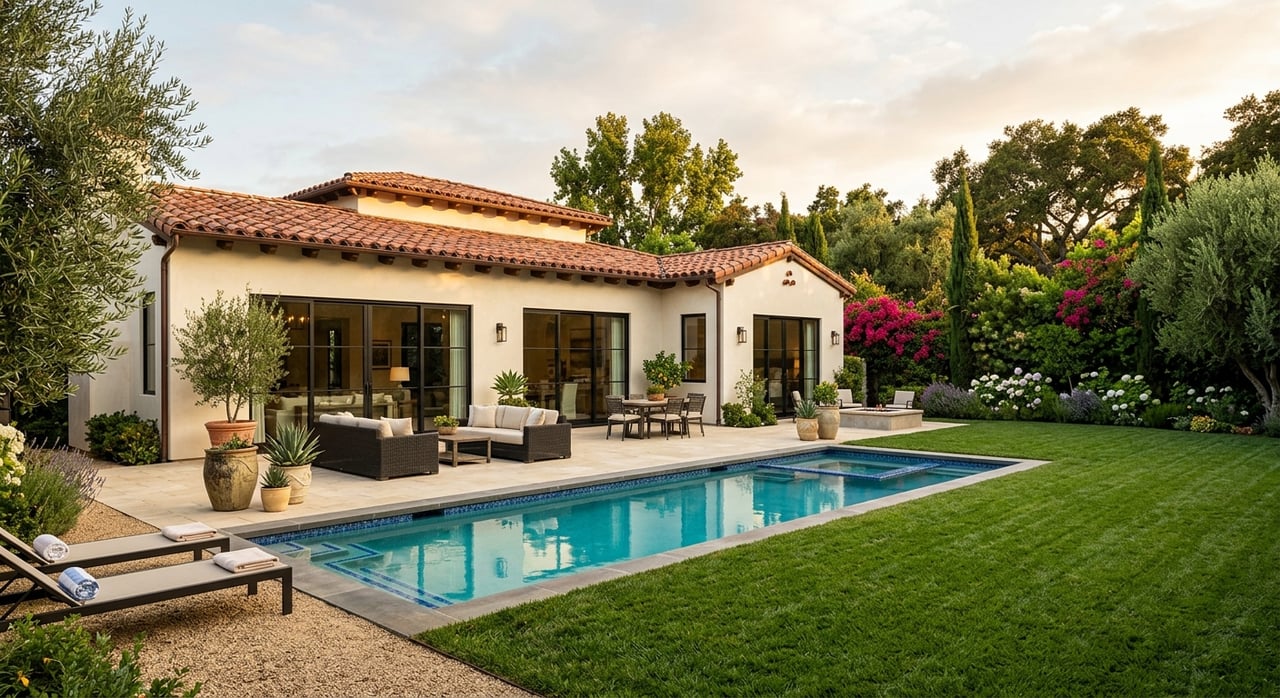
When Encino Makes Sense For Space-Seeking Buyers
July 2, 2026
July 2, 2026
If you have been searching the Westside and keep wishing for more lot size, more privacy, or simply more breathing room, Encino often enters the conversation for a reason. For many buyers, the draw is not that Encino is automatically cheaper. It is that certain pockets can offer a different kind of home, land, and daily experience within Los Angeles city limits. Let’s take a closer look at when Encino truly makes sense for space-seeking buyers.
Encino sits in the south San Fernando Valley, just north of the Santa Monica Mountains. That geography shapes the housing stock in a very practical way. According to Los Angeles planning materials, the area includes flatter sections north of Ventura Boulevard and larger, more irregular hillside lots to the south.
That difference matters if your priority is space. In simple terms, Encino is not one uniform neighborhood where every block offers the same value. Your experience here depends heavily on the pocket, the lot, and whether you are looking north or south of Ventura Boulevard.
For buyers focused on yard space, setbacks, and a more tucked-away feel, the hills south of Ventura Boulevard are often where Encino becomes especially compelling. SurveyLA points to this area as having more spacious hillside lots. Historically, Encino was associated with buyers seeking larger properties and a quieter lifestyle while still remaining inside Los Angeles.
That long-standing pattern still helps explain the area today. If you are crossing the hill from the Westside and hoping for a property that feels less compressed, these hillside pockets may align better with your goals than more centrally located urban neighborhoods.
It is also important to understand that Encino is not purely a single-family market. City planning documents and SurveyLA show multifamily clusters in the flatter northern areas, including concentrations of courtyard apartment buildings dating from the 1960s and 1970s.
That means buyers need to be precise about what kind of space they want. If you are looking for a detached home and more land, some sections will fit far better than others. If you are open to a condo, townhome, or a lower-maintenance option with access to Encino amenities, the flatter northern sections may deserve a closer look.
One of the biggest mistakes buyers make is treating Encino like a single price point or housing type. The local data shows a meaningful split between Encino’s zip codes, especially 91316 and 91436. Those differences affect what you are likely to find, and how far your budget may go.
In 91316, Census Reporter shows a more mixed housing pattern, with 54% multi-unit structures and 50% owner-occupied units. The median owner-occupied home value is listed at $961,100. In 91436, the picture looks much more detached, with 84% single-unit structures, 79% owner-occupied units, and a median owner-occupied home value of $2,000,001.
For a buyer, that tells you something very useful. The Encino name alone does not tell the full story. A home search here works best when you evaluate micro-markets rather than relying on broad neighborhood assumptions.
Current market pages show Encino with a median listing price of $1,969,500, 294 homes for sale, and a median 51 days on market. At the zip-code level, listing prices range widely, from $849,450 in 91316 to $3,355,000 in 91436.
That spread reinforces the main point: Encino’s value case is not about one simple headline number. In some cases, you may not find a major savings compared with other Los Angeles neighborhoods. The appeal is often about what your money buys in terms of lot size, privacy, structure type, and layout.
For buyers used to comparing only median prices, this is a helpful reset. Two neighborhoods can appear similar at a glance while offering very different living experiences once you factor in land, topography, and housing stock.
For many Westside buyers, Encino becomes attractive at the moment when priorities start shifting. You may want a larger home office, more outdoor space, a pool-sized yard, or a property with room to renovate over time. You may also want a quieter residential setting without leaving Los Angeles.
Encino has long appealed to homeowners looking for more land and privacy while staying connected to the city. Ventura Boulevard remains the main commercial artery, and the 101 and 405 freeways help connect the area to the Westside and downtown job centers. That combination is part of why Encino often stays on the shortlist for buyers who want more room without giving up access entirely.
Space usually comes with a trade-off, and in Encino that trade-off is often a more car-oriented routine. Commute data shows that 68% of workers in 91316 and 59% in 91436 drive alone. Public transit usage is very low, and mean commute times are about 31.9 minutes in 91316 and 29 minutes in 91436.
That does not mean Encino cannot work for city commuters. It means you should enter the search with a clear picture of how you like to live day to day. If you want more land and privacy, you may be exchanging walkability and a more urban rhythm for a driving-based lifestyle.
Encino’s appeal is not limited to house size. The neighborhood also benefits from a meaningful mix of parks and recreation. Los Encinos State Historic Park offers a five-acre rancho-era setting with picnic areas and guided tours just off the 101.
The broader Sepulveda Basin adds a much larger outdoor layer, with 234.6 acres of recreation features including Lake Balboa, trails, golf, a wildlife area, dog park, and bike paths. The MRCA’s Sepulveda Basin River Recreation Zone also offers free walking, fishing, and kayaking in designated areas.
At the local level, the Encino Community Center and Encino Park provide courts, picnic areas, and year-round programming for youth, adults, seniors, and families. For buyers who want a neighborhood that feels amenity-rich beyond the house itself, this can strengthen Encino’s overall lifestyle case.
No one can promise future appreciation, but some local fundamentals are easier to observe than others. In Encino, the most defensible long-term themes are land, privacy, and the character of the micro-market you choose. Current planning policy continues to emphasize preserving stable single-family neighborhoods, protecting hillside views, and directing higher-density housing closer to commercial centers, transit stations, and major bus routes.
That matters because it helps explain why certain residential pockets continue to feel distinct. For buyers seeking space, the policy environment still supports a stable residential character in much of Encino rather than broad, area-wide densification.
Encino is often a smart move when your priorities include:
If those points match what you are solving for, Encino may deserve serious attention. If your top priority is a more walkable, urban daily pattern, the trade-off may feel less favorable.
A smart Encino search starts with clarity. Instead of asking whether Encino is “worth it,” it is better to ask which part of Encino fits your version of space. The answer may look very different depending on whether you are comparing hillside single-family homes, flatter residential pockets, or attached housing closer to Ventura Boulevard.
This is also where local guidance matters. In a neighborhood with distinct submarkets, buyers often benefit from narrowing the search around lot shape, topography, commute patterns, and housing type before getting attached to a broad area label.
For Westside buyers in particular, Encino tends to make sense when you are no longer buying only by address prestige or coastal proximity. It becomes compelling when you are buying for how you actually want to live inside the home, and how much room you want that life to have.
If you are weighing Encino against Westside options, a thoughtful side-by-side comparison can make the decision much clearer. For tailored guidance on Los Angeles micro-markets, reach out to Shannon Minor.
Stay up to date on the latest real estate trends.
Experience a level of service grounded in discretion, attentiveness, and lasting relationships.